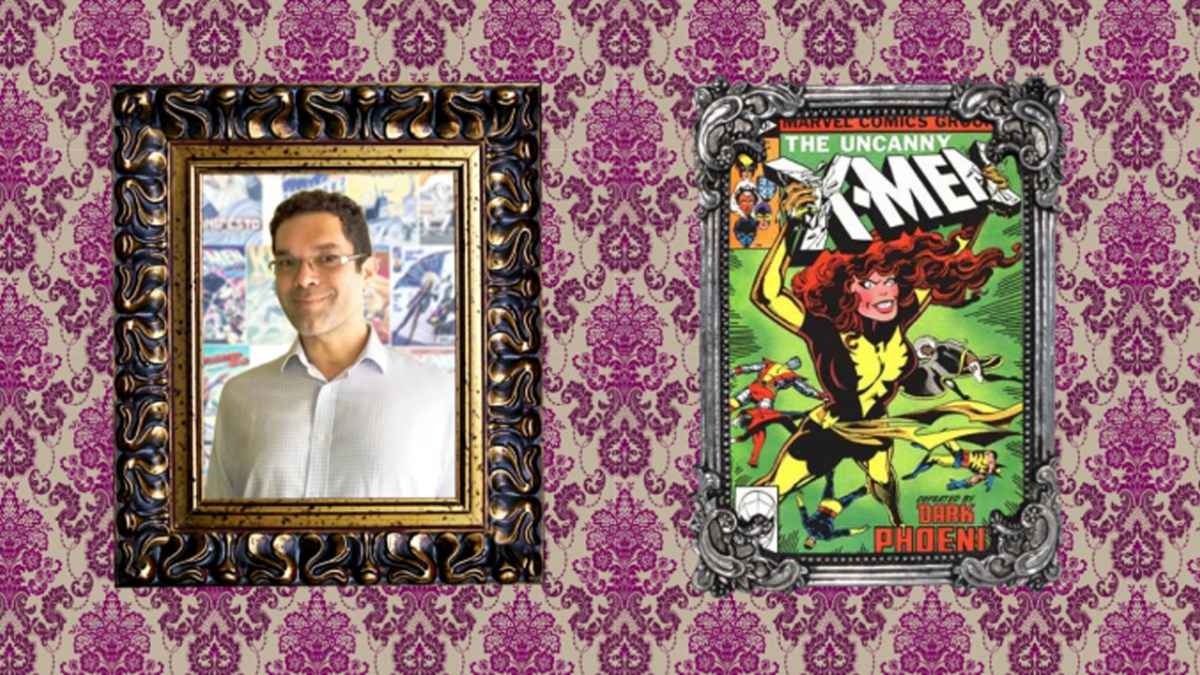
I have been following Kulbir’s posts in the House of Flying Scalpels for a while now and I was more than pleased to tell him one of why favourite stories of comics that he would then review.
As a long standing fan of the X-Men and the Dark Phoenix Saga being the reason I was hooked on superheroes I could not suggest anything else, that was the first thing that popped into my head when he asked me.
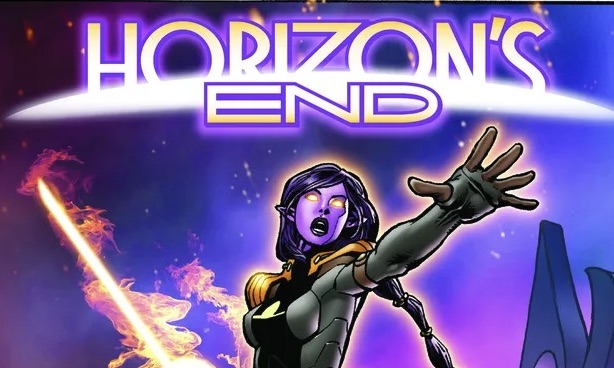
The writing team behind Horizon’s End talks sci-fi, collaborating with Darryl Banks, and bringing their Kickstarter graphic novel to life — all while keeping their day jobs.
Daron Kappauff and Chris Delloiacono are the writing team and creators of the new graphic novel “Horizon’s End” that is featured on the Kickstarter! Both have a great love for comics and are finally being given a chance to show their love with this new project! This isn’t the first attempt to be a part of the comic industry, as both of them have been writers and editors for 411Mania and ComicsNexus, also Daron wrote a 4-issue back-up story in Image Comics’ Small Gods (though the book was cancelled before his issues saw print). Writing is something they love to do, Daron has published short stories in a number of literary journals, and his first novel was a finalist in Blank Slate Press’ 2012 New Novelist Talent Hunt. Similarly, Chris had a short story published in the collection Contagion: War Stories, and Triptych is his first novel is currently serialized on Pulpline Magazine. Although both have a day job,
Daron as an English professor and Chris as an elementary school teacher, their love for comics as a medium and as a way of expressing the imagination has lead them to team up and give us a comic which looks to be fantastic. And although they have busy schedules, they gave some of their time to answer several of our questions
Both of you have careers and jobs out of the comic book industry so what made you want to be a part of it?
Daron: I’ve been writing for as long as I can remember, and as you know I dabble in just about everything: fiction, poetry, screenplays, etc. Through it all, though, comics have called to me. There’s something about the medium that entices me, a freedom you don’t get with most others. If you can imagine it, you can do it in comics, and I think that’s really appealing for a writer. I also really like the serialization aspect of comics. As a writer there’s so much more you can do with a character when you get to continually write them. In a novel, even a series, you only get to spend so much time with a character or group of characters. Eventually the book or series has to end. Not so with comics.
As for writing comics versus my career, I’m not looking to quit my day job. Hell I’m not even looking to make money on our current project (though I wouldn’t complain if we did). For me, telling the story, and finding people who like the stories I have to tell are the most important aspects of being writer. A lot of people try to break into comics thinking they’re going to be rich and famous. That’s not me. I want to entertain people and tell fun and engaging stories. If someday that means I could write full time, great. But as of now, I’m planning on keeping my day job, and I’m just going to pour all my creative energy into telling the best stories I can and not worry about how many books I have to produce to keep food on the table. Plus I’m pretty sure my wife would kill me or divorce me or worse if I quit my job to pursue a freelance gig in comics.
Like Daron said, I’m not looking to quit my day job. I’ve been a teacher for close to a decade and it’s such a fulfilling career. I couldn’t imagine giving up that aspect of my life. Storytelling and expressing my feelings in writing are one of my passions in my time away from the classroom. I can’t sit on the couch and relax for long, so letting my imagination run wild is a fabulous outlet.
About 35 years ago I bought my first comic, Marvel’s Star Wars #18, and my love of the medium has been there ever since. I’ve also written lots of different types of work over the years but comics have a special place in my heart. I don’t think there’s a more beautiful form of storytelling than the fusion of words and images that sequential comic panels offer. I’ve been going to comic shops on a weekly basis for since the ‘80s, and I’d love for others to read Horizon’s End with the same anticipation I’ve felt for countless comics.
Obviously you read comics from when you were kids and you are comic book fans so the step to become comic book writers was it a long time plan or an unexpected decision you took at some point?
Daron: Adding on to what I said above, I think I’ve wanted to write comics as long as I’ve been writing and reading comics. However, it’s not the only thing I enjoy writing, so I haven’t pursued it with the same vigor as others might. I’ve dipped my toes in a bunch of fields, and while I’m still actively working in other forms of writing, I’ve decided now is the time to really make a go for the comic field.
In the past you both have reviewed comics so how is it different for you from comic book fans and reviewers to become comic book writers?
Daron: Writing about comics and writing comics are about as fundamentally different as writing poetry and writing fiction. With that said, one isn’t necessarily more difficult than the other; they’re just two different types of writing, requiring different skill sets. And this is the case in all forms of writing. There are always different rules to follow and different skills used in every field and discipline.
For me, switching from one to the other isn’t all that difficult. I’ve studied writing, both academically and personally, for years, and I’m constantly working on improving my skills in various fields. So it’s mainly just switching gears. I’ll say this, though, it’s definitely a lot more fun to actually write comics, but I think it’s due to the inherent joy that’s affiliated with “creating” something.
Horizon’s End is the graphic novel you are working on so how did you two end up collaborating?
Chris: Back when Daron was the EIC of the comic department at 411Mania, he posted on the old DC Message Board that they were looking for writers to join the site. I answered the ad and that one small missive led to us becoming so close we’re essentially brothers. We live 1,000 miles apart but we get together as often as possible, talk all the time on the phone, and each of us have been part of the other’s wedding party. That friendship and the love we both have for writing led us to this momentous point.
Whose idea was Horizon’s End and how much input did the other have in forming the graphic novels final story?
Daron: The initial idea for Horizon’s End was mine, based on a loose concept I had rattling around my head for years. I pitched the idea to Chris, and the two of us set about fleshing out the idea and populating the world with interesting characters.
Past the initial spark, it’s been an entirely collaborative project. We’ve both brought ideas to the table, and we always confer before we move forward with changing or adding anything. To me, this is the whole point of doing a co-written project. If we didn’t want each other’s input, we wouldn’t be working on this together. We’ve both written plenty of things separately, but we really enjoy working together, bouncing ideas around, and creating a world that is very much a part of both of us.
How did each of you approach the writing of Horizon’s End, what I mean is did you divide on who will be doing the script or the dialogues or did you work the whole scenario together?
Chris: We first broke the story down into the broad strokes we were looking to tell. Horizon’s End was initially planned out as a five-issue miniseries, but Kickstarter is such a special distribution channel, we decided it was best to tell the story as a graphic novel. We’re essentially releasing the graphic novel in lieu of five individual issues. It just didn’t make sense to do it any other way, since our backers are helping us fund the complete story.
As for the actual writing process, once we had the major story, we broke each of the issues (or chapters) down into more detailed segments. Each of us worked on a specific chunk of the story then passed the section back and forth. It’s amazing, but the work has been so refined at this point that it’s hard to remember who originally wrote what. We each have strengths and weaknesses as storytellers, so I think Horizon’s End has become a true synthesis that accentuates our strengths.
Darryl Banks is a well-known creator and a fan favorite for those who followed his Green Lantern run; he will be doing the art on Horizon’s End so how did this collaboration come about?
Daron: Chris and I have been acquainted with Darryl for many years now. We first met at the Pittsburgh Comicon, which was the first show we covered together as reporters. Both of us were fans of his work, so he was one of the primary creators we sought out. Since then Darryl and I have stayed in contact, discussing his career, my writing, and any and everything else.
As Chris and I progressed on Horizon’s End, we’d often talk about how great a fit Darryl would be for the project. We’d even conceive characters based on how we thought Darryl might design them. Then after many failed attempts to get an amateur artist to commit to the project, we decided to pitch it to him. Luckily for us, the timing was right and Darryl liked what he heard.
How is it to work both as fans and as professional writers with Darryl Banks?
Daron: I’m not going to lie; it’s nothing short of amazing. Darryl is on the short list of artists I’ve always said I’d want to work with if I ever broke into comics. So getting to work with him as I’m breaking in is a dream come true (cliché as that sounds).
Similarly, Chris and I are both extremely excited about helping Darryl break back into comics. Comic fans have been deprived of Darryl’s fantastic work for far too many years now. To say that we’re proud and ecstatic to have a hand in redirecting the spotlight in his direction is an understatement.
Professionally speaking, Darryl has been great to work with. From character design to page layout, he’s impressed us with his dedication to the project and his willingness to do whatever it takes to make the project look incredible. We honestly couldn’t have asked for a better experience or collaborator.
Who else is on the creative team or is contributing to helping bring Horizon’s End to its final form?
Chris: We’ve been blessed to work with some of the finest talents in the comic industry. Our colorist, Moose Baumann, has worked on hundreds of comics for Marvel, DC, Valiant, Dark Horse, and just about every other publisher over the past twenty years. Troy Peteri is going to do the lettering, and he may be the busiest man in the comics. Currently, he’s working with Mark Waid’s Thrillbent imprint, Top Cow, and many other areas as both letterer and writer. And let’s not forget our eye catching logo, which was designed by the incomparable Dave Lanphear. Then of course that’s all capped off with the fantastic cover Stephane Roux did for us!
Going past the people actively involved in the graphic novel, numerous pros are contributing artwork. These one-of-a-kind pieces will be available as Kickstarter rewards. World famous talents like Mike Grell, Mikel Janin, Barry Kitson, Todd Nauck, Jim Calafiore, and Ryan Benjamin will offer sketches of our cast, and many of them will be printed in the book. I think it’s fair to say that Horizon’s End is packed front to back with some amazing creators!
Based on pictures you have posted on Horizon’s End Facebook page we can assume it’s a scifi graphic novel, would you like to tell us of when and where the story is taking place?
Chris: Talking real life for a minute, let me say, I’m a firm believer that the universe is inhabited by beings outside of our solar system. Horizon’s End could be going on somewhere out there in the midnight sea of space. Imagine a galaxy where a malevolent force, The Black Dominion, is running roughshod from planet to planet taking anything they want. This particular adventure occurs on the planet Usyel as its pre-industrial civilization is terrorized by the superior might of the Dominion. Hope seems lost and a miserable life strip-mining their own planet is the only option for most residents of Usyel.
Does the story concern a protagonist and its supporting cast, a team of powered individuals or something completely different?
Chris: Andara is the key protagonist, and her arrival on Usyel sets our story in motion. She has tremendous strength, endurance, and amplified fighting abilities. She’s bent on revenge, but how will that help an enslaved world? The will of the people of the planet have been so thoroughly subjugated Andara must find a way to fashion a resistance to the oppressors. In short, it’s revenge and revolution.
What makes it different from the mainstream comics that are being published at the moment? Is it the story, the art, the characters or something else?
Daron: You mean besides the fact that it’s being written and drawn by people who aren’t currently doing any mainstream comics?
Chris: Daron and I aren’t trying to reinvent the comic book. Horizon’s End can almost be considered our love letter to the comics, novels, movies, and television shows that were a seminal part of our coming of age. We may not be creators in the mainstream of today’s comic market, but I feel that Horizon’s End would fit in on the shelf of any comic shop in the world. It’s a fantasy, space opera with grand battles and a coming of age quest. We hope it’s a blast for everyone to read!
Being a graphic novel will it appeal only to comic book fans or will it have a broader range of readers who will find interest in it?
Daron: Our goal is for the book to appeal to science fiction fans as much as comic book fans. The project is very much influenced by our mutual love for science fiction and super heroes, and we’ve tried to find the right balance between the two.
Chris and I are both unabashed classic Sci-Fi fans, and we haven’t in anyway tried to hide our influences. We proudly wear our inspiration on our sleeves, and readers should easily be able to see them in our work. We’re hoping this honest admiration for what came before inspires our readers and help them appreciate what we’re trying to do with this story.
Is there any possibility to see a Horizon’s End sequel exploring and expanding its story or is it a one shot?
Daron: If we have anything to say about it there will most definitely be more Horizon’s End ahem on the horizon. We have the story planned as a series of graphic novels that tell Andara’s ongoing story as she ages and finds her place in the universe. The creation of those further adventures will be entirely dependent on how the first book is received and if there’s a demand for more.
With all that said, what’s presented in this first book is a complete story. We’ve come up with an ending that we feel is satisfying, while at the same time points to further adventures to come. Think Star Wars: A New Hope or The Matrix. Either franchise could have ended with the first film and viewers could have been satisfied, but they also nicely paved the way for future movies.
Chris: Sometimes storytellers take for granted how invested a reader will be in their world. We don’t assume there will be more Horizon’s End stories, so we’re not holding anything back. We want to give every reader their money’s worth with a beginning, middle, and end. Our hope is that you’ll ask for more!
Last question in summary what is Horizon’s End about and why will people have a blast reading it?
Daron: Simply put, Horizon’s End is a high-energy Sci-Fi romp focused on character driven stories that touch on engaging themes everyone can relate to. It’s a story about self-discovery and accountability set against the backdrop of alien worlds. Plus, are you seeing this art? Darryl Banks and Moose Baumann: what else needs to be said?
Thank you both for the time for this interview! I hope the best for “Horizon’s End” which I’m more than sure it will be a big success! There are more than enough pages to read created by several of the most talented people! “Horizon’s End” for me seems to be an ultimate sc-fi graphic novel for every comic fan that will enjoy reading!
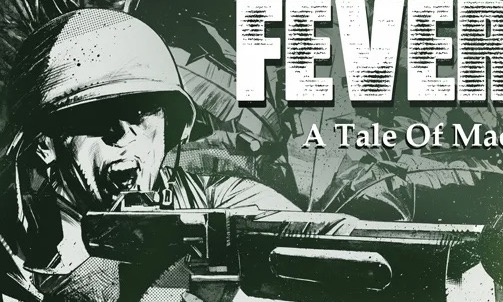
Mike Heimos is the writer and creator of Fever Ridge: A Tale of MacArthur’s Jungle War, a unique comic published by IDW. Though this may be his first published work in comics, he’s been writing for years — prose, poetry, even tax law. We asked him about his journey, his influences, the extensive research behind the series, and what’s next.
Mike Heimos is the writer and creator of Fever Ridge: A Tale of MacArthur’s Jungle War, a very unique comic published by IDW. This might be his first published work in the comic book industry, but it’s definitely not the first time he’s put pen to paper — he’s been writing for years! We’re glad he gave us the chance and time to answer several of our questions so we could learn more about him as a writer with a unique technique, his comic book, and possible future plans
First of all I would like to ask when did you start writing and when did you finally decide to pursue a career in creating comic books.
Well I’ve been writing for a long time, doing prose and poetry really just for myself, and writing articles and books in tax law which grow out of my career as a tax attorney, but I’ve not endeavored to have my fiction published until relatively recently. The story on when I decided to create some graphic novels:
Sometime in 2009, I decided to write the fiction that was swimming in my head all the years prior, including the 10+ years filled with practicing tax law. But without the technical structure one has in writing legal articles and such, at first the fiction writing was adrift. Then on a nice Friday afternoon, threw some cold water on my face and decided to devote the weekend solely to drinking some beer, making a couple of groovy dinners, and just thinking, writing down story ideas…
In those days I lived in Denver and was a huge, devoted Battlestar Galactica fan. During that beer-and-brainstorm weekend, in Sunday’s newspaper there was an advert indicating that the Starfest con in Denver was welcoming Katee Sackhoff as one of the celebrity guests. She was (and is) one of my favorite TV actresses, and I bought the con badge.
On arrival I learned that the comic book folks had a con in tandem with Starfest, so I popped over to see what the comic-con was all about. I had not been a devotee of comics, but I’m a curious guy, love learning new things, and at the con there were seminars about comics creation, writing, and other stuff that tickled my fancy.
Frankly, I had thought these things were only on the order of, “hey look at this extreme bodybuilder/superhero…” etc. But no, there were interesting people giving seminars, having stimulating discussions about art and story telling, technology and marketing and so on. Intrigued, I went home and had a few more of those beers (one toasted to Katee of course) and thought rather simply “…a couple of my stories would be awesome to see as well as read. Now I want to see them, or at least parts of them.”
My first level was to think about illustrated novels and novellas, sort of like a Mark Twain or Arthur Conan Doyle things, and the concept just grew that some of my ideas would be very slick as full on graphic novels, in the right hands of course. And one of those ideas was the WWII story that was inspired by my grandfather’s service in New Guinea and the Philippines.
And now, I’m quite devoted to building a career as a writer, both in comics and graphic novels, and in ‘traditional’ writing.
Would you like to tell us a few things about your site Kingfishergraphicarts.com on why did you start it, what are its purpose and its aim?
I created the website back in 2010/11 (quoting myself!), “[as] primarily a foray in laying out a bunch of creative ideas for you, hopefully you enjoy! We’ll surely be submitting some works to appropriate publishers such as Image and Dark Horse, but whatever is not “picked up” (and it is assumed here that all will not…) will be self-published here and will be free-to-view [frankly, not sure if I’d stick to this part in the future 😉 ]. Some fun merchandise will evolve, there is a forum/blog for daily or other periodic observations, space dedicated to other creators as well, and other things will be added as they are dreamt up.”
I did a good few months of blogging on it, but thing is, the first idea I submitted, Fever Ridge, was picked up by IDW in 2012 and since, I’ve had my sights trained mainly on that project. But it is possible that the website will evolve more once we finish up Fever Ridge, though again, I will soon be pitching Red Forest and Penis My Dragon, the other two creations I’ve put up on the website to-date
I have loads more writing in my computer, waiting to be liberated! Most are not, but several other concepts would be slick as comics – other historical fiction, a huge space opera, a dystopian-future tale of a USA with a Stasi-like agency, a few comedies, etc.
Fiver Ridge: A tale of MacArthur’s Jungle War is you first published work, was it also you first choice to pitch to a publisher?
It was not necessarily the first choice in my mind and heart back in 2011/12, but it just sort of happened that way. Right when Nick was finishing up Fever Ridge pitch pages, Tom Waltz at IDW saw his portfolio at San Diego Comic Con and he expressed serious interest in getting a pitch, so we did it.
Since Fever Ridge connects inter-textually with two other work I will create – Red Forest, which I mentioned earlier, and Gilded Steppe – but it actually comes last in historical chronology (Red Forest is set in the 13th Century, Gilded Steppe in Classical times), you might expect that I’d have started say with Gilded Steppe. But again, opportunity knocked as it did.
How did the collaboration with the rest of the creative team on Fever Ridge come into existence?
At the Denver comic con mentioned above, I attended a great seminar with Nick on the dais. I approached him afterward about availability and whether he would consider collaborating on one of my ideas. He asked for summaries and in a few days he indicated being most attracted to the WWII story. And wow, am I glad he was!
Then Nick found Brandon DeStefano, who expressed keen interest in lettering; and Brandon got hold of Jordie Bellaire, who wanted to color. Then Jordie was wooed by Darkhorse and had to jump on an opportunity there, so she secured Nolan Woodard for us.
You have mentioned in the comic book that a big influence for Fever Ridge is a story said by your grandfather based on real life facts, so are there any other influences both from real life and fiction that you brought into the story which played a major role in forming it?
There are lots, lots of influences from reality and fiction going into the creation of Fever Ridge. One of my secondary historical sources is a nice piece called “Silent Warriors” by Lance Q. Zedric, a history of the Alamo Scouts (see issues 2 and 3 of Fever Ridge); another is a cool history/self-propaganda, Four Years Among Cannibals by the enigmatic Hermann Detzner, an explorer of New Guinea prior to and during World War I.
As for fictional influences, well I am with Umberto Eco in arguing that basically all the literature one experiences in their past reading goes into the literature one creates. But I can tell you that some things that specifically influence me in making Fever Ridge are going to appear in Fever Ridge Issue 4, literally for you to see, and other influences include stories such as Saul Bellow’s works Ravelstein and Henderson The Rain King, and… others!
I think in the final trade paperback I’m going to provide both a complete bibliography and an exegesis essay that will sort of “line by line” reveal all the little elementals for the story and the ideas presented, because Fever Ridge is pretty complex and layered. Let me say that, for example, what many people seem to be thinking is the strictly history lesson of Issue 2 is BOTH that and fully part of the fictional story. So do NOT dismiss that chapter as “yawn, a history lesson,” if you care about fully understanding what happens with the characters. You will want to pay attention to Issue 2.
In the first three issues of Fever Ridge anyone can see you have made tremendous research to the point it’s like reading a comic book documentary of that era both in history and environment. So how much of your time did this research consume and are you still researching for the following issues?
Indeed the research is constant; it really never ends until the book is off to the printers. I’m always re-thinking and re-reading and re-considering, and the underlying aim being not necessarily exact accuracy but plausibility, at least to the elements that call for historicity. But as I’ve said in other interviews, there too are magical realism aspects in Fever Ridge and thus, that stuff will be plausible assuming the existence of a little magic in the universe.
Both story and art wise Fever Ridge is being told in a unique way! In many ways the story seems like it’s more like a statement of events, is this your usual writing style or is it “designed” this way specifically for this comic?
My “usual writing style” is fairly versatile, ambidextrous. But yes, we are aiming to be pretty unique in Fever Ridge. The art style, the color choices, messing with the time/space continuum, here and there breaking the “180 degree rule” to intentionally create surreality/disorientation (Nick and I are huge admirers of Stanley Kubrick, who did this a fair bit, e.g. famously in The Shining in the bathroom scene), not pulling punches on the gore, etc.
It’s all about showing war and ‘the War’ as the nigh insane thing that it is/was. Societies periodically ask – no, tell – young men to do things that otherwise would call for their being judged sociopaths, and within the context of ‘war,’ if they do it nasty and big enough, they get ribbons and medals and lauds. That’s a messed up thing…
And yes, Fever Ridge is being told as a historical fiction, and indeed will internally evolve to be…
Well, you’ll need to wait until Issue 8.
How much input did you have in Nick Runge’s, Jordie Bellaire’s and Nolan Woodard’s art?
Essentially, I write a play and therein give Nick stage directions (I explain this in some detail in Issue 3’s essay), and he gives some directions on colors to Jordie and Nolan.
Some details that I need, I am VERY specific about. For example, in Issue 3 you will notice that the severed Japanese hand, found by Erik while he and Blackie are on their ‘final exam’ exercise in the bush, is a left hand. It’s a wee bit important that the hand be a left hand…you’ll see why later in the series. So, I wrote in the script, “Nick, it’s gotta be a left hand!”
Are you satisfied of the final outcome in each issue up to now and if you had a second chance would you change anything?
Great question.
I think it’s no slight at all, to any of the visual artists, to say that the issues, the covers, etc., never exactly match what I had in my own mind. I think it’s a fool’s errand to expect that the writer/creator’s idea will fully, exactly become reality on the page (this is of course when, as here, the visual artists and the writer/creator are not the same person! but even then?).
Yet this does not mean that one cannot achieve satisfaction. Indeed, to date I’m quite satisfied because the essence of my scripts have been made real. Sure, there are aspects of the art, and my own writing, and the lettering that I would change or have changed if given the opportunity. But that’s the way of things!
You have to understand, that Perfection as a goal and a process, but something that can never really be achieved. As a fan of jazz, “the imperfect art,” I know that imperfections add depth and it seems to me that actually achieving perfection would be a bit of a tragedy.
Is Fever Ridge a onetime story or is there a possibility of seeing the main cast of characters in a future limited series?
As to the main cast, it is intended to have finality at the end of issue 8. But, as the saying goes, I will “never, say ‘never’.” Never is a long time! It’s quite possible that a true “spinoff” can spring from Fever Ridge, quite a few angles come to mind.
By the way, I’m already on record – in Issue 2’s supplemental materials – disclosing that Franz will die in the War. Indeed, he will. As for the other main casts’ survival, you will have to see.
I’ll repeat here another disclosure that I’ve given in other interviews, that one of the characters is the vehicle for intertextuality that connects Fever Ridge to Red Forest and Gilded Steppe. Perceptive readers should be able to glean who it is, pretty soon.
thank you Mike for taking time from your schedule for this interview!
Back in 2013, Kulbir gave me the title of “The Explorer” in his House of Flying Scalpels. I’ve been active on Twitter for years, chatting about Marvel, web comics, and Greek artists. Here’s why I felt honoured — and why you should check out his site.
I have been using Twitter for a while now. Although I originally made my account way back in 2011, it is only in the last year or so that I have become truly active.
I chat a lot on Twitter and enjoy it very much. I have had the chance to find other people who express their love for comics with the same passion as I do.
Mostly I tweet about:
Marvel
New comic books from artists who self‑publish their work
Web comics you can find online
Events, comics, and artists from my country, Greece
But mostly, I love to share my excitement about something new that I have discovered.
I guess that is why Kulbir gave me the title of “The Explorer” in his House of Flying Scalpels. I am proud to be a subject of his House.
Kulbir is one of the people I really like to chat with on Twitter. He has an amazing site packed with detailed, in‑depth articles on comics. I really like his site and his passion for comics — and I strongly suggest you check it out!





 Costas on Comics